Entrepreneurship & Small Business
Interactive Study Guide - Master the Key Concepts
Question 1
a) State the key differences between an entrepreneur and a business individual with reference to:
Nature, Goals, Risk taking, Level of innovation, Market position, Business orientation
(10 Marks)
a) Differences Between an Entrepreneur and a Business Individual
| Parameter | Entrepreneur | Business Individual |
|---|---|---|
| Nature | Innovative | Traditional |
| Goals | Customer Oriented | Profit Oriented |
| Risk Taking | High (The higher the better) | Low (The lower the better) |
| Level of Innovation | Introduces new ideas to run the business | Follows existing ideas |
| Market Position | Market Leader | Market Player |
| Business Orientation | Opportunity Oriented | Resources Oriented |
b) Consider a newly established restaurant business.
i. Briefly explain how the business can be developed using the entrepreneurial process. (6 Marks)
ii. State the main types of competitors faced by the restaurant and give one example for each. (4 Marks)
b) Restaurant Business Application
i. Developing the Business using the Entrepreneurial Process
1. Idea Generation:
The owner selects a restaurant idea, such as an organic or healthy food
restaurant, based on customer trends.
2. Business Model Development:
The owner decides the menu, pricing, and whether to offer dine-in, takeaway,
or delivery services.
3. Resourcing:
Required money is arranged, and staff such as chefs and waiters are
hired.
4. Promotion:
The restaurant is advertised using social media, posters, or opening
offers.
5. Actualisation:
The restaurant is officially opened and starts serving customers.
6. Harvesting:
After success, the owner may expand to new branches or earn long-term
profits.
ii. Main Types of Competitors (Restaurant Business)
Direct Competitors:
Businesses that sell the same type of food to similar customers.
Example: Another Italian restaurant in the same area with similar
prices.
IT Example: Two antivirus software companies like Norton and McAfee competing
for the same home users.
Indirect Competitors:
Businesses that offer alternative ways to satisfy the same need.
Example: Fast-food outlets, grocery store ready meals, or food delivery
services.
IT Example: Cloud storage (Google Drive) indirectly competes with USB flash
drives and external hard drives.
Future Competitors:
Businesses that may enter the market in the future.
Example: A food truck planning to open a permanent restaurant
nearby.
IT Example: A tech startup developing AI-powered coding tools that may compete
with GitHub Copilot.
Question 2 (Total Marks: 20)
a) Explain the reasons for mergers and acquisitions and discuss the benefits of mergers and acquisitions with suitable examples. (12 Marks)
a) Reasons for Mergers and Acquisitions and Their Benefits
Mergers and acquisitions (M&A) are used by companies to grow, reduce uncertainty, and improve competitiveness in the market.
Main Reasons for Mergers and Acquisitions
- Increase Market Power: Companies acquire competitors to reduce competition and gain a stronger position in the market.
- Spreading Risk: Firms diversify into different products or industries to reduce dependence on one business.
- Shifting Core Business: M&A helps firms move into new and more profitable markets.
- Managing Change: Companies use M&A to respond to industry changes, technology shifts, or new regulations.
Benefits of Mergers and Acquisitions (with Examples)
- Market Dominance: Combined firms gain a larger market share.
Example: Tata acquiring Jaguar Land Rover to strengthen its global automobile presence.
IT Example: Microsoft acquiring GitHub to dominate the developer tools and code hosting market. - Risk Reduction: Businesses reduce risk by entering new industries.
Example: Microsoft acquiring LinkedIn to diversify beyond software.
IT Example: Amazon diversifying from e-commerce into cloud computing (AWS) and smart devices (Alexa). - Expansion into New Markets: Immediate access to new customers and services.
Example: Facebook acquiring Instagram and WhatsApp to dominate social media and communication.
IT Example: Google acquiring YouTube to enter the video streaming market instantly. - Acquiring Skills and Technology: Firms gain new capabilities and strong
brands.
Example: Apple acquiring Beats to enhance its music and audio business.
IT Example: Google acquiring DeepMind to gain advanced AI and machine learning capabilities.
b) Briefly explain the common reasons for the failure of mergers and acquisitions. (8 Marks)
b) Common Reasons for the Failure of Mergers and Acquisitions
Although mergers and acquisitions offer many benefits, many fail to achieve expected results due to several reasons.
- Integration Problems: Different company cultures, systems, and work practices are difficult to merge.
- Poor Target Evaluation: Inadequate due diligence leads to overpaying or acquiring weak companies.
- High Debt Levels: Large loans taken to finance acquisitions increase financial pressure.
- Failure to Achieve Synergy: Expected cost savings or performance improvements do not occur.
- Excessive Diversification: Moving away from the core business reduces focus and efficiency.
- Management Distraction: Managers focus too much on acquisitions and ignore daily operations.
- Oversized Organization: Very large firms become difficult to control and manage effectively.
Question 3 (Total Marks: 20)
a) Explain the role of Angel Investors in supporting entrepreneurial ventures.
Your answer should include: Meaning of angel investment, Characteristics of angel investors, Benefits to startups
(10 Marks)
a) The Role of Angel Investors in Supporting Entrepreneurial Ventures
Meaning of Angel Investment
Angel investors are wealthy individuals who provide financial support to start-up businesses at an early stage. They invest their own money in exchange for ownership shares or convertible debt. Angel investors help businesses that are too new or risky for banks or venture capitalists.
Characteristics of Angel Investors
- Personal Wealth: They invest their own personal funds.
- High Risk Tolerance: Willing to take higher risks for higher future returns.
- Supportive Motivation: Often interested in helping new entrepreneurs succeed, not just profit.
- Personal Relationship: May be friends, family members, or independent wealthy individuals.
- Early-Stage Focus: Mainly invest during the seed or start-up stage.
- Accredited Investors: Usually meet legal requirements to invest in high-risk ventures.
Benefits to Startups
- Early Capital: Provides funding when banks refuse due to lack of collateral or history.
- Mentorship and Advice: Offers guidance, experience, and industry knowledge.
- Patient Capital: More flexible and willing to wait for returns.
- Business Validation: Angel investment builds credibility and attracts future investors.
b) Explain the importance of conducting a feasibility study before starting a business with reference to:
Product feasibility, Organizational feasibility, Industry and market feasibility, Financial feasibility
(10 Marks)
b) Importance of Conducting a Feasibility Study
A feasibility study is an early evaluation of a business idea to decide whether it is worth starting before spending large amounts of money and time.
1. Product Feasibility
Product feasibility checks whether customers like the product and are willing to buy it.
Importance: It prevents launching products that customers do not want.
Example: Before selling a new fitness drink, the entrepreneur asks people to
taste it and checks if they are willing to pay for it.
IT Example: Before launching a new mobile app, developers release a beta
version to test user interest and gather feedback.
2. Organizational Feasibility
Organizational feasibility checks whether the business has the right skills, people, and resources.
Importance: It ensures the owners and team are capable of running the business successfully.
Example: Before starting a medical lab, the founders check if they have trained
staff and proper lab facilities.
IT Example: Before starting a software company, founders verify they have
skilled developers, project managers, and proper development infrastructure.
3. Industry and Market Feasibility
This evaluates whether the industry and target market are attractive.
Importance: It helps avoid entering a market that is too crowded or declining.
Example: Before opening a mobile phone shop, the owner checks how many shops
already exist and whether enough customers live nearby.
IT Example: Before launching a new SaaS product, the startup analyzes existing
competitors, market size, and growth potential in the cloud software industry.
4. Financial Feasibility
Financial feasibility checks whether the business can afford to start and make a profit.
Importance: It ensures start-up costs, income, and profits are realistic.
Example: Before opening a restaurant, the owner estimates rent, food costs,
salaries, and expected daily sales.
IT Example: Before building a web application, the startup calculates server
costs, developer salaries, marketing budget, and projected subscription revenue.
Question 4 (Total Marks: 20)
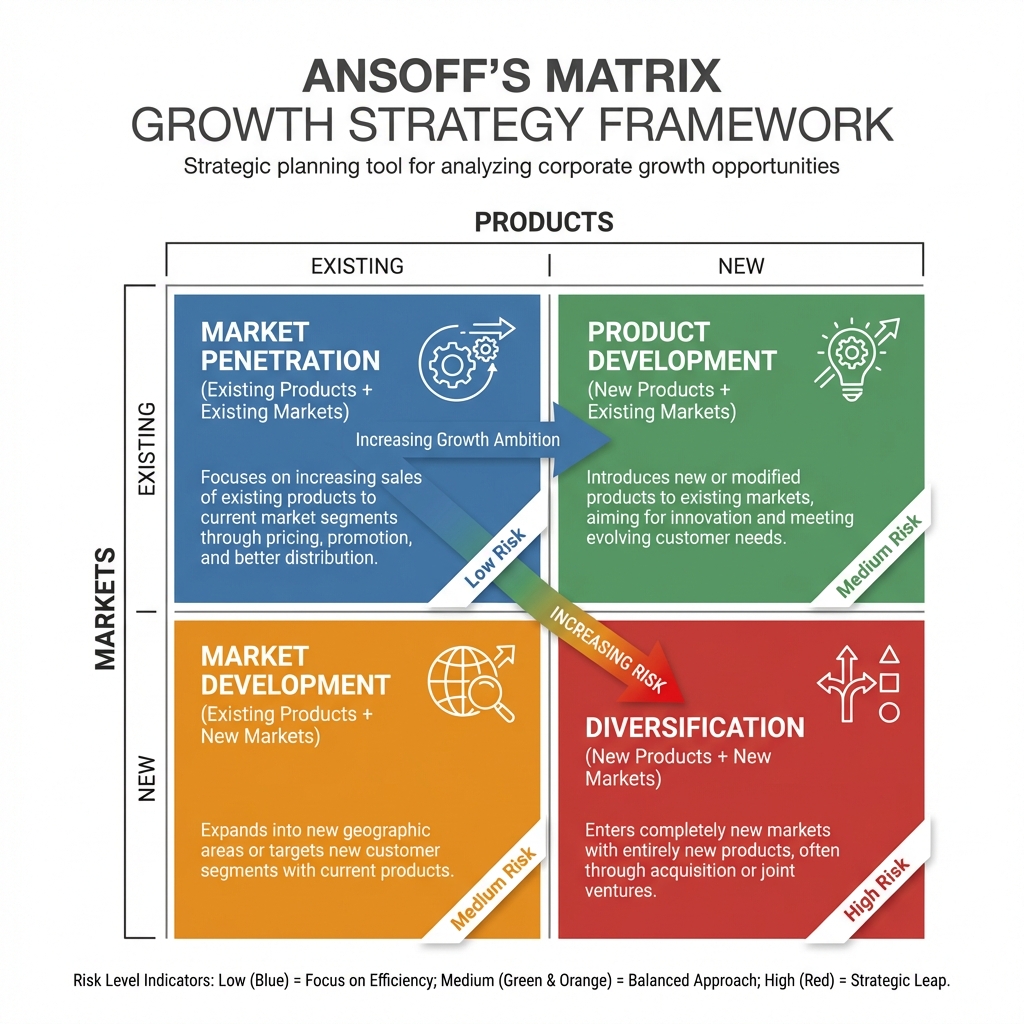
a) Briefly explain the Ansoff's Matrix and its four growth strategies with examples. (8 Marks)
b) Discuss the differences between the following forms of business ownership: Sole proprietorship, Partnership, Company. Based on your discussion, justify which form is most suitable for a startup business. (12 Marks)
a) Ansoff's Matrix
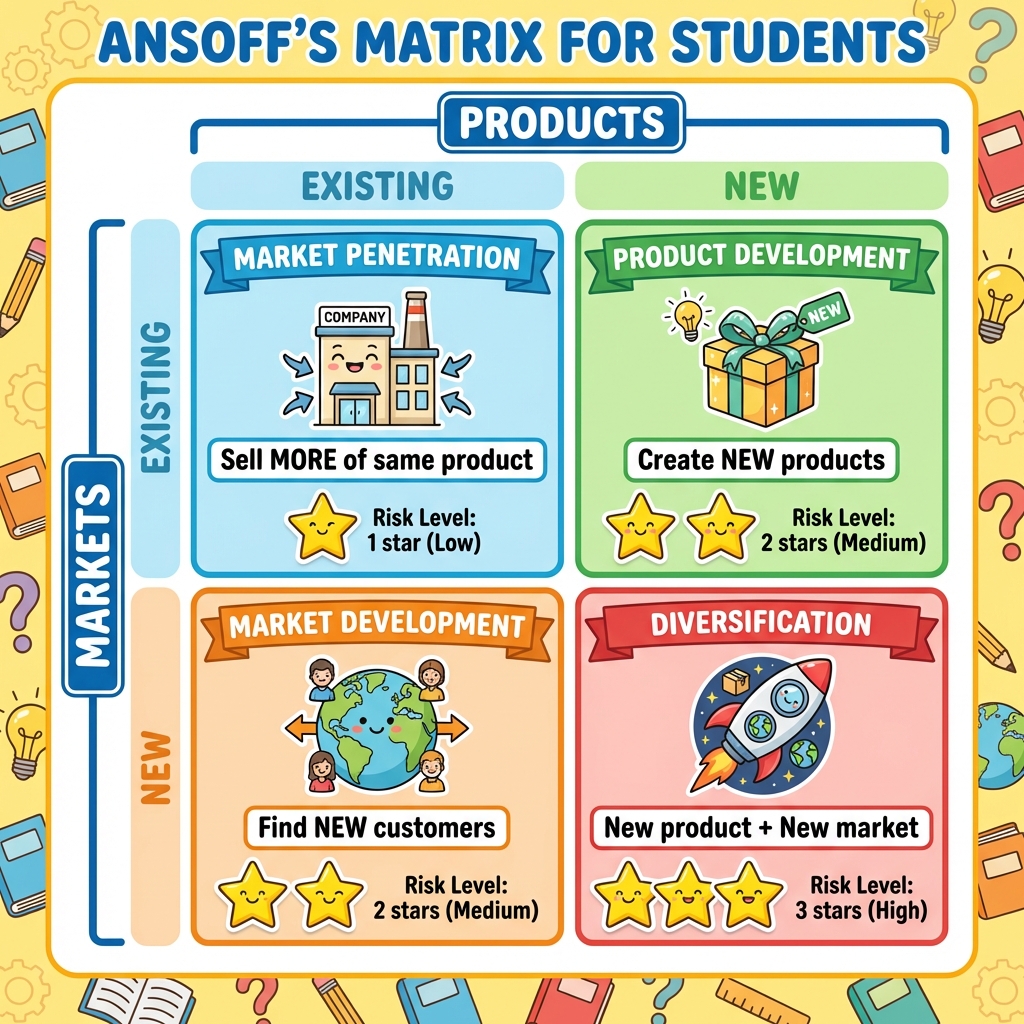
Ansoff's Matrix is a strategic planning tool that helps businesses choose growth strategies by comparing existing and new products with existing and new markets.
Four Growth Strategies
1. Market Penetration (Existing Product - Existing Market)
Increase sales of current products in current markets through promotions or discounts.
Example: Coca-Cola increasing advertising to boost sales in existing
regions.
IT Example: Microsoft offering discounts on Office 365 subscriptions to
existing enterprise customers.
2. Product Development (New Product - Existing Market)
Introduce new products to existing customers.
Example: Apple launching new iPhone models for current users.
IT Example: Google introducing Google Meet to existing G Suite (Workspace)
users.
3. Market Development (Existing Product - New Market)
Enter new geographical areas or target new customer groups.
Example: McDonald's opening outlets in a new country.
IT Example: Netflix expanding its streaming service to new countries in Asia
and Africa.
4. Diversification (New Product - New Market)
Introduce new products into new markets (highest risk).
Example: Tesla expanding into solar energy products.
IT Example: Amazon moving from online retail into cloud computing (AWS) -
completely new product in a new B2B market.
Memory Trick: PPMD - Penetration, Product, Market, Diversification
b) Forms of Business Ownership and Suitable Form for a Startup
1. Sole Proprietorship
- Owned and managed by one person
- Easy and inexpensive to start
- Owner has unlimited liability
- Pros: Full control, simple setup
- Cons: High personal risk, limited capital
2. Partnership
- Owned by two or more people
- Shared skills and resources
- Partners have joint and unlimited liability
- Pros: More capital, shared responsibilities
- Cons: Conflicts may arise, shared profits
3. Company (Limited Liability Company - LLC)
- Separate legal entity
- Owners have limited liability
- Easier to raise funds from investors
- Pros: Liability protection, growth potential
- Cons: Higher setup cost, legal formalities
Most Suitable for a Startup
Limited Liability Company (LLC) is most suitable because:
- Protects personal assets
- Attracts investors easily
- Supports business growth and expansion
Question 5 (Total Marks: 20)
Evaluate the importance of below mentioned concepts with industry-level examples.
a) Business Process Reengineering, b) Porter's Value Chain, c) Branding, d) BCG Matrix, e) Risks of International Business
(4 Marks x 5 = 20 Marks)
a) Business Process Reengineering (BPR)
Evaluation: BPR involves radical redesign of business processes to improve cost, speed, and quality.
Industry Example: Banks replacing manual loan approvals with automated digital
systems.
IT Example: Companies replacing legacy on-premise servers with cloud
infrastructure and DevOps automation pipelines.
b) Porter's Value Chain
Evaluation: Identifies primary and support activities that add value and help reduce costs or create differentiation.
Industry Example: Manufacturing firms improving inbound logistics and
operations to reduce waste.
IT Example: A software company optimizing its development (primary) and HR/IT
support (support) activities to deliver faster releases.
c) Branding
Evaluation: Branding builds trust, loyalty, and strong customer perception, allowing premium pricing.
Industry Example: Apple charging premium prices due to strong brand
value.
IT Example: AWS and Azure commanding higher prices than smaller cloud
providers due to brand trust and reliability perception.
d) BCG Matrix
Evaluation: Portfolio tool that classifies products as Stars, Cash Cows, Question Marks, and Dogs to guide investment decisions.
Industry Example: Apple using profits from older iPhones (Cash Cows) to fund
new high-growth models (Stars).
IT Example: Google using profits from Search ads (Cash Cow) to fund
experimental projects like Waymo self-driving cars (Question Mark/Star).
e) Risks of International Business
Evaluation: International operations face risks such as currency changes, legal regulations, and political instability.
Industry Example: Exporters suffering losses due to foreign exchange rate
fluctuations.
IT Example: Software companies facing challenges with GDPR compliance in
Europe, data localization laws in different countries, and geo-political restrictions on
technology exports.
Click cards to reveal answers
Question 1 of 15
Question 1: Entrepreneur vs Business Individual
Key Differences
- Nature: Entrepreneur is Innovative; Business Individual is Traditional
- Goals: Entrepreneur is Customer-oriented; BI is Profit-oriented
- Risk Taking: Entrepreneur has High risk tolerance (the higher the better); BI prefers Low risk
- Level of Innovation: Entrepreneur introduces new ideas to run the business; BI follows existing ideas
- Market Position: Entrepreneur acts as Market Leader; BI is a Market Player
- Business Orientation: Entrepreneur is Opportunity-oriented; BI is Resources-oriented
Question 1b: Restaurant Business - Entrepreneurial Process
6 Steps of Entrepreneurial Process
- 1. Idea Generation: Brainstorming the concept (e.g., organic farm-to-table theme)
- 2. Developing Business Model: Structuring the plan - target market (diners), revenue streams (food sales/catering)
- 3. Resourcing: Acquiring funding, kitchen equipment, and staff
- 4. Promotion: Creating awareness through marketing (social media, grand opening events)
- 5. Actualisation: Launching the restaurant and executing operations
- 6. Harvesting: Reaping rewards (profits) or planning expansion
Types of Competitors
- Direct Competitors: Businesses offering identical products
Example: Another restaurant serving similar cuisine on the same street
- Indirect Competitors: Businesses offering close substitutes
Example: A food delivery service or a grocery store deli
- Future Competitors: Businesses not yet in the market but could enter at any time
Question 2: Mergers & Acquisitions
Mergers
A strategic decision where two companies combine to form a single entity to increase market share, reduce costs, or achieve operational synergies.
Acquisitions
When one company purchases another to access new markets, technologies, or customer segments. This facilitates rapid growth.
Reasons for M&A Failure
- Bad Acquisitions: Selecting the wrong target company
- Integration Problems: Failure to merge company cultures and systems
- Poor Target Evaluation: Inadequate due diligence leading to overpaying
- High Debt Levels: Large loans increasing financial pressure
- Failure to Achieve Synergy: Expected cost savings do not occur
Question 3: Feasibility Study
A feasibility analysis evaluates a business idea to determine its viability before committing resources.
1. Product Feasibility
Assesses the overall appeal of the product:
- Desirability: Does it make sense? Is it timely?
- Demand: Will people buy it?
2. Organizational Feasibility
Evaluates if the business has sufficient capabilities:
- Management Prowess: Passion and market understanding
- Resource Sufficiency: Access to non-financial resources (office space, equipment)
3. Industry/Market Feasibility
- Industry Attractiveness: Young, fragmented, and growing industries are best
- Target Market Attractiveness: Large enough to profit, small enough to avoid huge competitors
4. Financial Feasibility
- Estimates Total Start-Up Cash Needed
- Compares performance to similar businesses
- Looks for financial attractiveness (e.g., recurring revenue)
Question 4a: Ansoff's Matrix
Tool that determines growth strategies by analyzing markets and products.
Four Growth Strategies
- 1. Market Penetration (Existing Product + Existing Market): Increasing
sales through marketing/discounts
Example: Coca-Cola increasing advertising
- 2. Product Development (New Product + Existing Market): Launching new
products for current customers
Example: Apple launching new iPhones for existing users
- 3. Market Development (Existing Product + New Market): Expanding into new
geographies
Example: McDonald's entering a new country
- 4. Diversification (New Product + New Market): Entering new markets with
new products - HIGHEST RISK
Example: Tesla launching solar energy products
Question 4b: Forms of Business Ownership
Sole Proprietorship
- One owner with unlimited liability
- Easy and inexpensive to create
- Hard to raise capital
- Pros: Full control, simple setup
- Cons: High personal risk, limited capital
Partnership
- Two or more owners sharing skills
- General partners have unlimited liability
- Offers diverse skills but risks disputes
- Pros: More capital, shared responsibilities
- Cons: Conflicts may arise, shared profits
Company (LLC) - Best for Startups
- Owners (members) have limited liability (protected assets)
- Allows unlimited investors and tax flexibility
- Complex to set up
- Pros: Asset protection, growth potential
- Cons: Higher setup cost, legal formalities
- Protects entrepreneur's personal assets from business risks
- Allows for unlimited investors (crucial for growth)
- More credible to investors than sole proprietorship
Question 5: Strategic Concepts
a) Business Process Reengineering (BPR)
Evaluation: Radical redesign of processes to achieve dramatic improvements in cost, quality, and speed.
b) Porter's Value Chain
Evaluation: A framework identifying activities (Primary and Support) that add value to products.
c) Branding
Evaluation: Creating a unique identity to build trust and loyalty.
d) BCG Matrix
Evaluation: A portfolio tool analyzing Market Growth vs. Market Share.
- Stars: High growth, high share - invest heavily
- Cash Cows: Low growth, high share - milk for profits
- Question Marks: High growth, low share - decide to invest or divest
- Dogs: Low growth, low share - consider divesting
e) Risks of International Business
Evaluation: Uncertainties operating across borders:
- Foreign Exchange Risk: Currency fluctuations
- Political Risk: Government instability
- Cultural Risk: Different customs and practices
- Legal Risk: Different regulations and laws
Key Comparisons
Entrepreneur vs Business Individual
| Parameter | Entrepreneur | Business Individual |
|---|---|---|
| Nature | Innovative | Traditional |
| Goals | Customer Oriented | Profit Oriented |
| Risk Taking | High (higher = better) | Low (lower = better) |
| Innovation | Introduces new ideas | Follows existing ideas |
| Market Position | Market Leader | Market Player |
| Business Orientation | Opportunity Oriented | Resources Oriented |
Forms of Business Ownership
| Aspect | Sole Proprietorship | Partnership | LLC/Company |
|---|---|---|---|
| Owners | One | Two or more | One or more |
| Liability | Unlimited | Joint Unlimited | Limited |
| Setup | Easy & Cheap | Moderate | Complex & Costly |
| Capital Access | Limited | Moderate | High (investors) |
| Best For | Small business | Small-medium | Startups seeking growth |
Ansoff's Matrix
| Existing Product | New Product | |
|---|---|---|
| Existing Market | Market Penetration (Coca-Cola ads) |
Product Development (Apple new iPhone) |
| New Market | Market Development (McDonald's new country) |
Diversification (Tesla solar - HIGH RISK) |
Visual Diagrams for Key Concepts
These infographics help you visualize and memorize key frameworks for your exam. Each topic includes its reference diagram.
Entrepreneurial Process (IBM RAH)
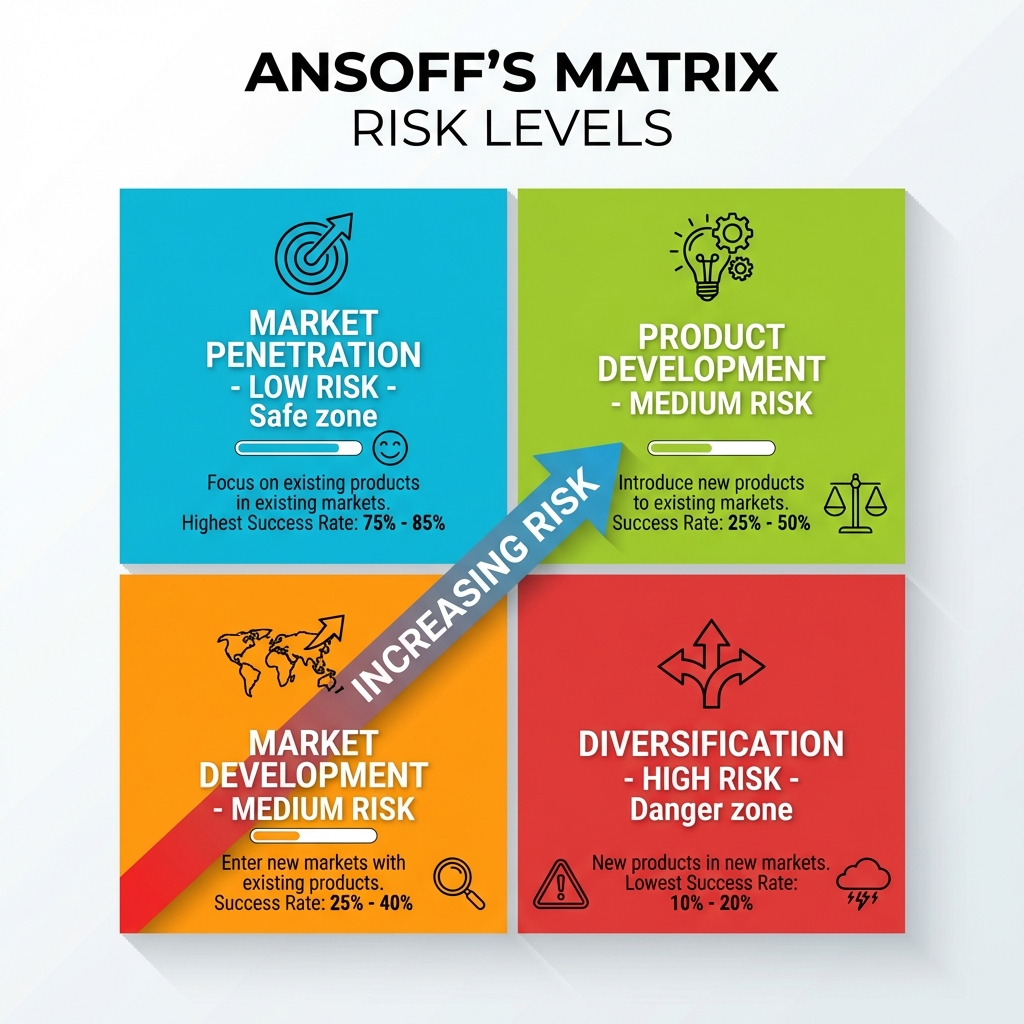
Ansoff's Growth Matrix
Risk increases as you move away from current products/markets
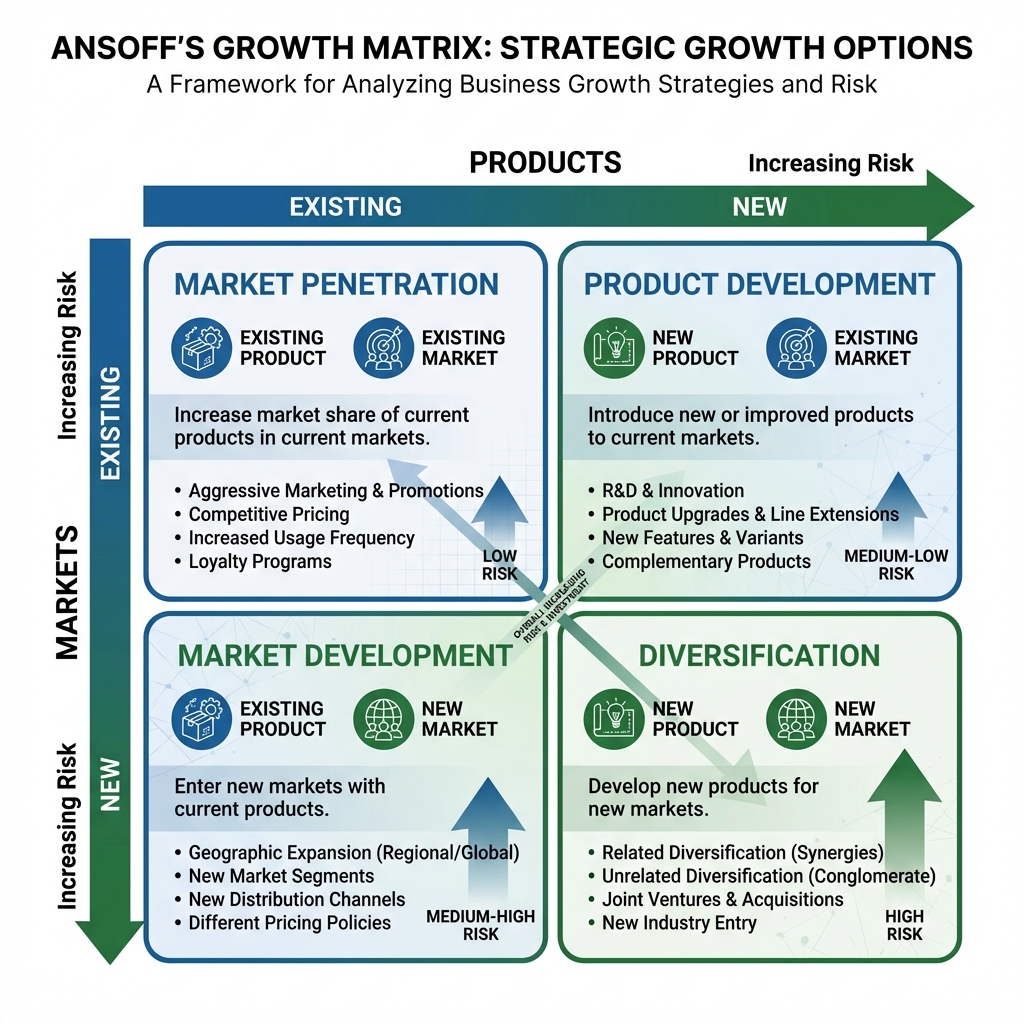
Click to enlarge
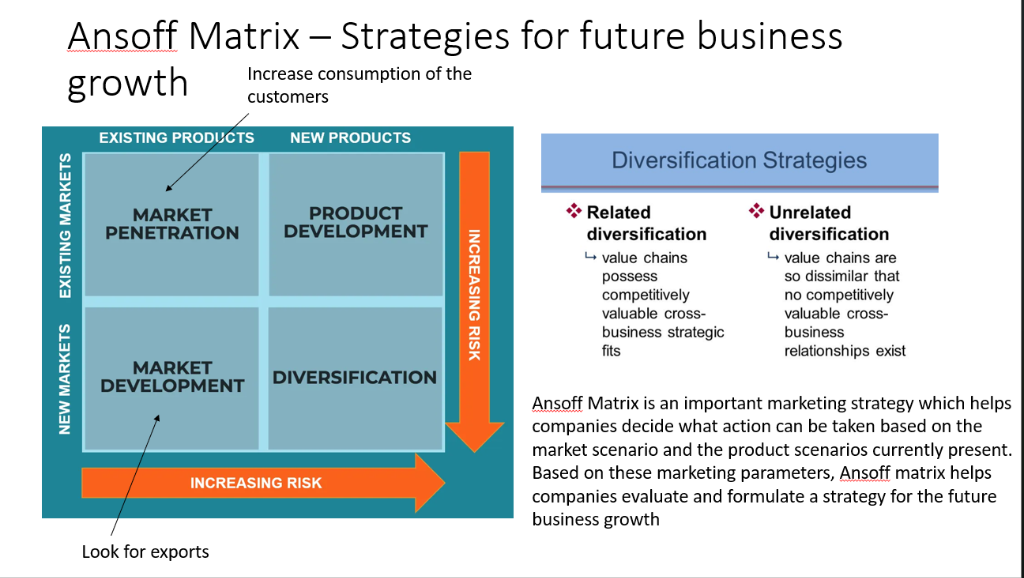
Diversification Types
Market Penetration
Increase sales of current product
Ex: Coca-Cola adsProduct Development
New product for current customers
Ex: Apple new iPhoneMarket Development
Current product in new market
Ex: McDonald's new countryDiversification
New product + New market = HIGHEST RISK
Ex: Tesla solar panelsBCG Growth-Share Matrix
Categorize products by growth rate and market share
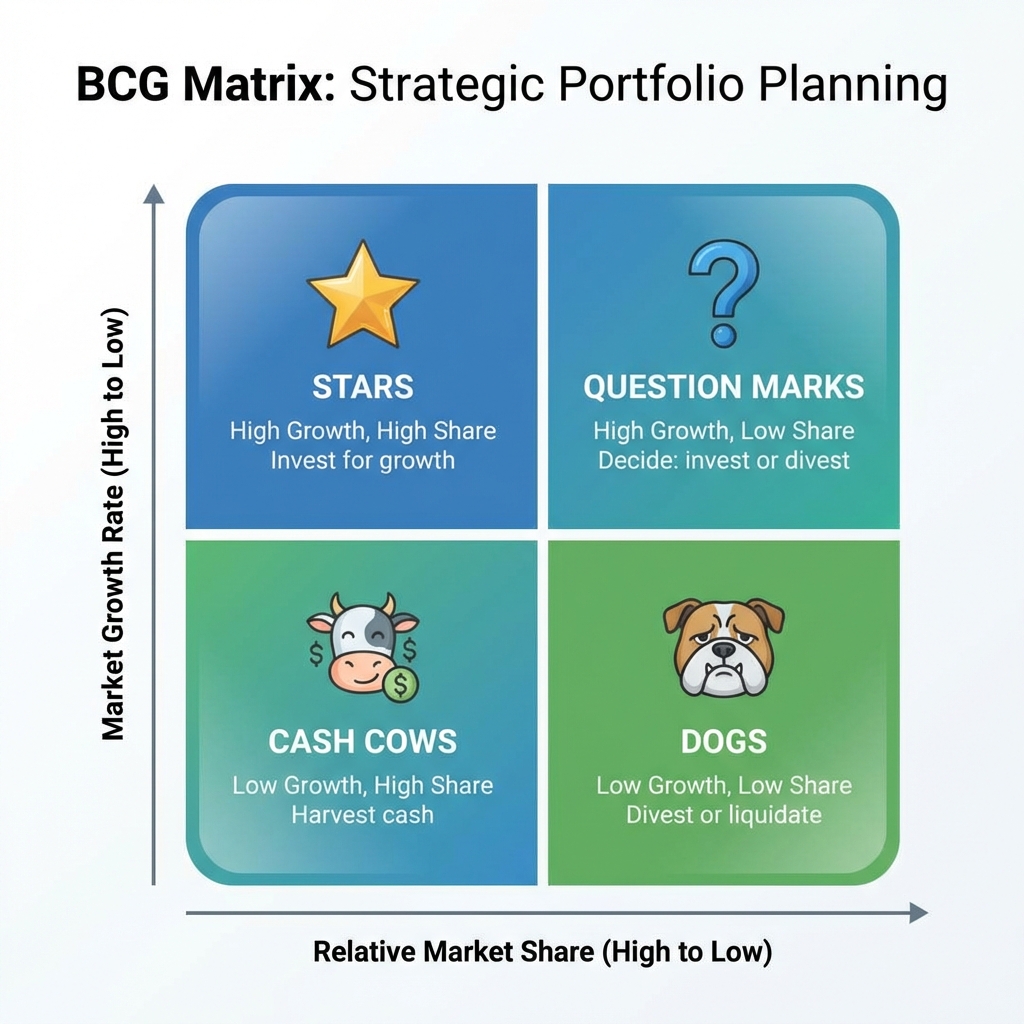
Basic BCG Matrix
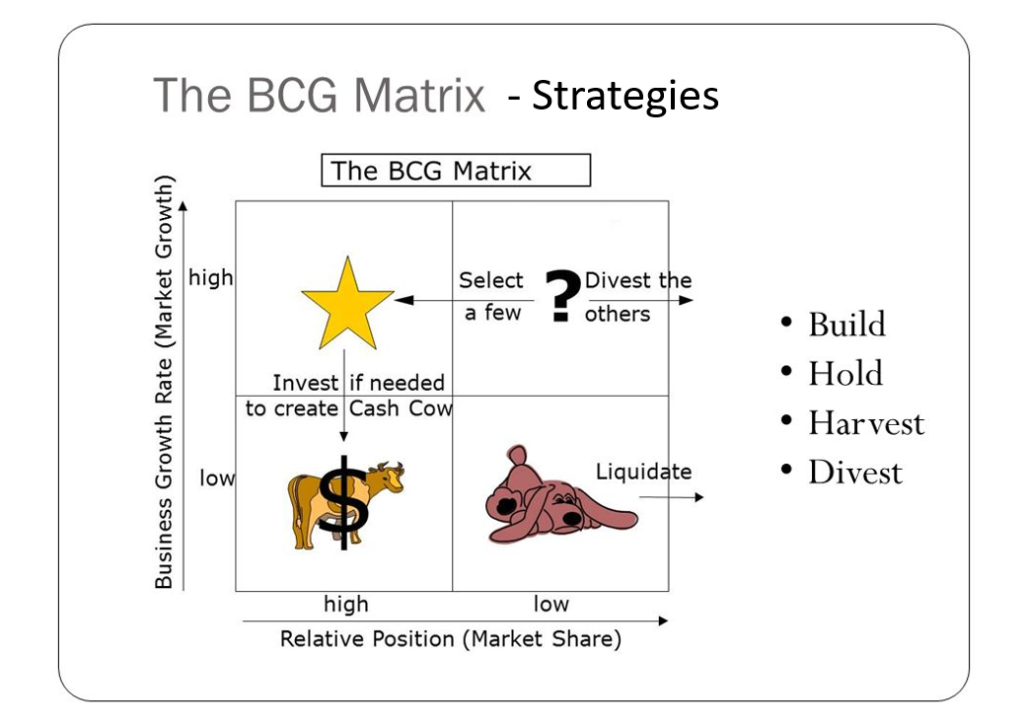
Strategies (Build, Hold, Harvest, Divest)
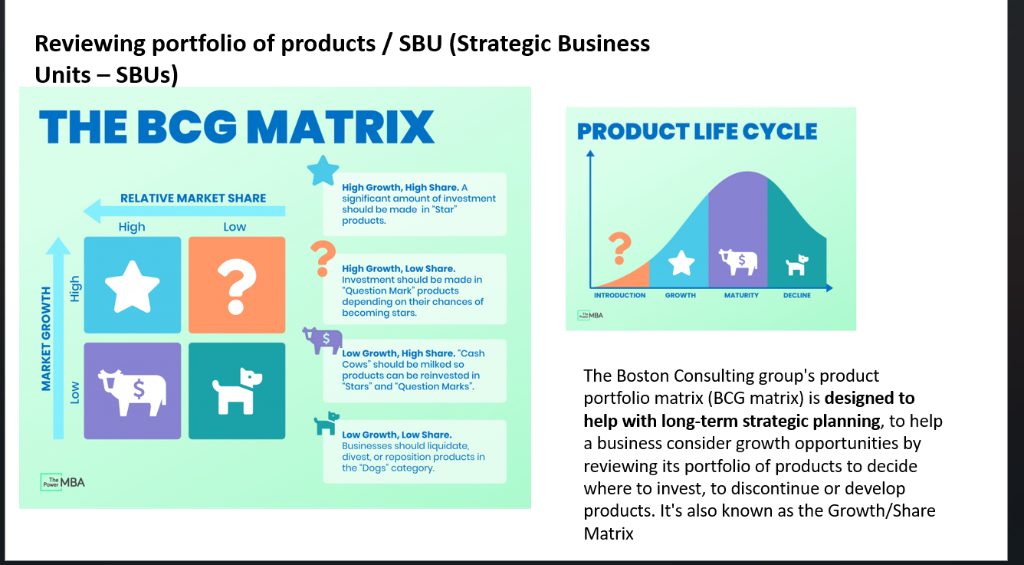
BCG + Product Life Cycle
STARS
Invest to grow
QUESTION MARKS
Invest or drop?
CASH COWS
Milk the profits
DOGS
Phase out
📝 Note
The BCG Matrix is a portfolio planning model used to analyze products based on their Market Growth Rate and Relative Market Share. It helps companies decide where to allocate resources (invest, harvest, or divest).
• Stars: Services (Apple TV+, iCloud) - high growth, high share.
• Cash Cows: iPhone - mature market, huge market share, generates
cash.
• Question Marks: Vision Pro Headset - high growth potential, currently
low share.
• Dogs: iPod - low growth, low share (discontinued).
• Stars: Dialog TV, Genie/Fintech (High growth).
• Cash Cows: Mobile Voice/Data (Steady income).
• Question Marks: Smart Home Devices (Growing but low share).
a) Business Process Reengineering (BPR)
Old Process
Complex, Slow, Costly
New Process
Simple, Fast, Efficient
📝 Note
BPR involves the fundamental rethinking and radical redesign of business processes to achieve dramatic improvements in critical measures of performance (cost, quality, service, and speed). It's not just "fixing" a process, but "reinventing" it.
Ford analyzed their accounts payable process where 500 people matched purchase orders, receipts, and invoices. By reengineering to "invoiceless processing" (paying automatically upon receipt of goods), they reduced the headcount by 75% and eliminated paperwork delays.
Netflix reengineered movie rental from "Shipping DVDs by Mail" → "Instant Digital Streaming". They didn't just improve shipping speed; they completely changed the process of delivery, killing the Blockbuster model.
c) Branding
📝 Note
Branding is creating a unique name, image, and identity for a product in the consumer's mind. It differentiates the product from competitors and builds an emotional connection.
Coca-Cola's brand is so strong (valued over $80 billion) that people buy it not just for the taste, but for the feelings of "happiness" and "sharing" associated with it. This allows them to charge a premium price compared to generic cola brands.
Dilmah positions itself not just as "tea", but as "Single Origin, Ethical, Garden Fresh" tea. This branding allows them to sell at premium prices globally, distinguishing it from bulk blended teas.
Feasibility Study Framework (POIF)
Check these 4 areas before starting a business
Product Feasibility
Will customers buy it?
- Desirability
- Demand testing
Organizational Feasibility
Is the team capable?
- Management prowess
- Resource sufficiency
Industry/Market Feasibility
Is the market attractive?
- Industry attractiveness
- Target market size
Financial Feasibility
Will it make money?
- Startup costs
- Profit potential
Types of Competitors (DIF)
DIRECT
Same product, same customers
Pizza shop vs Pizza shop
INDIRECT
Different product, same need
Pizza vs KFC vs Grocery
FUTURE
May enter the market later
Food truck -> Restaurant
Porter's Value Chain
Activities that add value to products/services
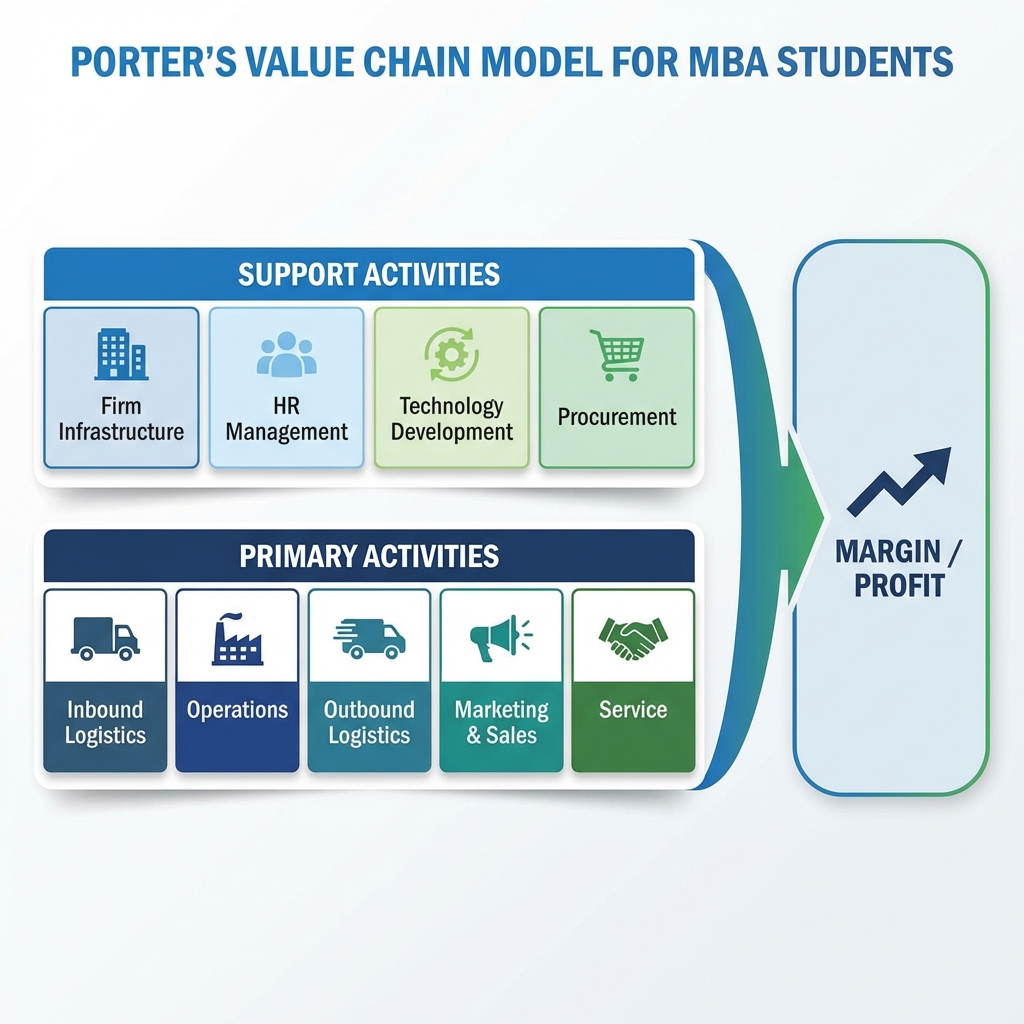
Click to enlarge
Infrastructure
Planning, Finance
HR
Hiring, Training
Technology
R&D, IT
Procurement
Purchasing
Inbound Logistics
Receiving materials
Operations
Manufacturing
Outbound Logistics
Distribution
Marketing/Sales
Promotion
Service
After-sales
📝 Note
Porter's Value Chain disaggregates a firm into its strategically relevant activities (Primary & Support) to understand the behavior of costs and existing/potential sources of differentiation. A company creates value by performing these activities better or cheaper than competitors.
• Primary (Operations): Roasting high-quality coffee beans.
• Primary (Service): Premium in-store experience with free Wi-Fi.
• Support (HR): Extensive training for baristas (partners).
• Support (Procurement): Fair trade coffee sourcing.
• Inbound/Ops: Flat-packing furniture (saves massive shipping
space/cost).
• Marketing: Showroom experience + Meatballs (keeps customers
longer).
• Service: Customer self-assembly (shifts labor cost to customer,
lowering price).
e) Risks of International Business
Cultural Risk
Language, customs, taboos
Legal/Political
Different laws, instability
Economic/Forex
Currency fluctuations
Operational
Logistics, supply chain
📝 Note
Doing business internationally brings additional risks beyond normal domestic operations. Companies must adapt their strategies to navigate these uncertainties.
• Risk: Beef is culturally taboo and often legally restricted in
India.
• Adaptation: McDonald's removed beef from the menu
entirely involved creating the "Chicken Maharaja Mac" and extensive vegetarian options
(Aloo Tikki Burger) to succeed in the market.
• Risk: Strong resistance from local Tuk Tuk unions (protests/threats)
and government regulations.
• Strategy: Uber introduced "UberTuk" to integrate local drivers into
their system rather than just competing with them.
Entrepreneur vs Business Individual
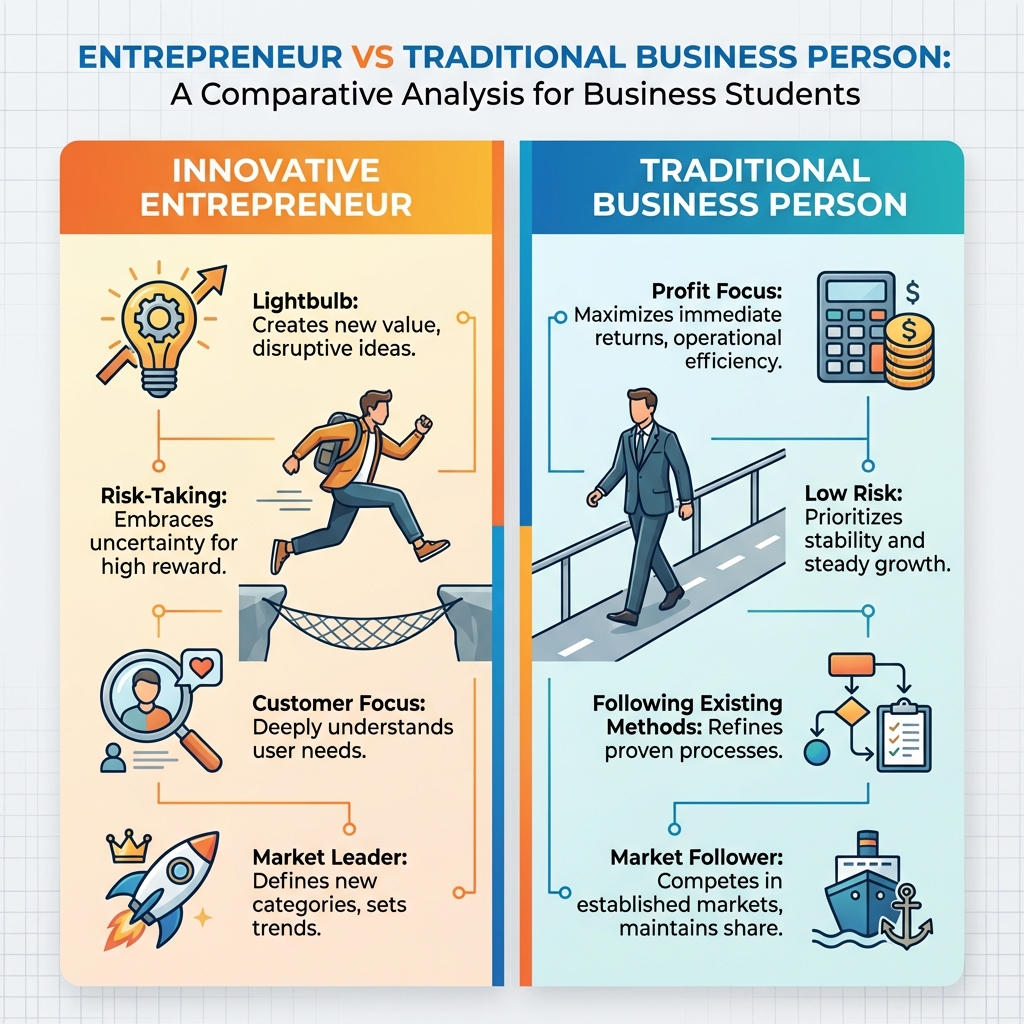
Click to enlarge
| Aspect | Entrepreneur | Business Individual |
|---|---|---|
| Nature | INNOVATIVE | Traditional |
| Goals | CUSTOMER Oriented | Profit Oriented |
| Risk | HIGH (higher = better) | Low (lower = better) |
| Innovation | Introduces NEW ideas | Follows existing ideas |
| Market Position | Market LEADER | Market Player |
| Orientation | OPPORTUNITY Oriented | Resources Oriented |
Remember: ICHOML
Entrepreneur = Innovative, Customer-oriented, High-risk, Opportunity-focused, Market Leader
Mergers & Acquisitions
MERGER
A + B = C
Two companies combine to form ONE new company
Disney + Pixar = Disney-Pixar
ACQUISITION
A buys B
One company BUYS another company
Facebook bought Instagram
Why M&A Fails (I PIE DOS)
Forms of Business Ownership
Sole Proprietorship
1 Owner
UNLIMITED Liability
Easy to start, but risky
Partnership
2+ Owners
Joint UNLIMITED Liability
Share skills & capital
LLC / Company
1+ Owners
LIMITED Liability
Best for startups!
Porter's Generic Strategies - Competitive Advantage
How companies achieve competitive advantage in the market
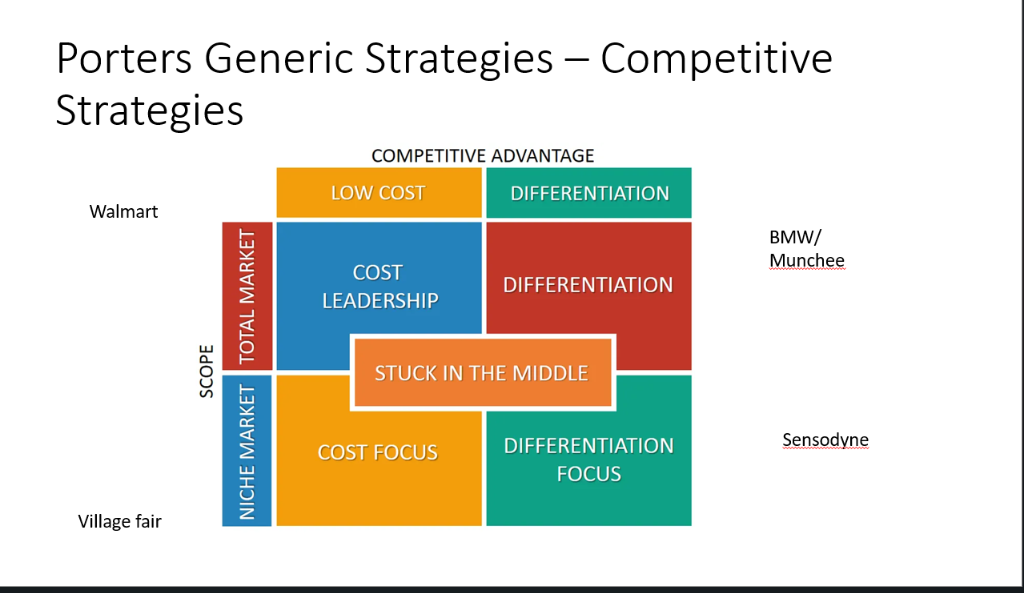
Click to enlarge
Cost Leadership
Lowest cost producer in the industry
Example: Walmart, AirAsia
Differentiation
Unique products/services that command premium
Example: BMW, Munchee
Cost Focus
Low cost in a NICHE market
Example: Village Fair, Budget Airlines
Differentiation Focus
Premium products for a NICHE market
Example: Sensodyne (sensitive teeth)
Stuck in the Middle
Companies that fail to pursue a clear strategy end up with no competitive advantage
Key Insight
Porter argues companies must choose ONE strategy. Trying to be both low-cost AND differentiated leads to being "stuck in the middle" - the worst position.
- Cargills: Cost Leadership - Lower prices, wide network, budget-friendly - Keells: Differentiation - Premium experience, quality products, modern stores
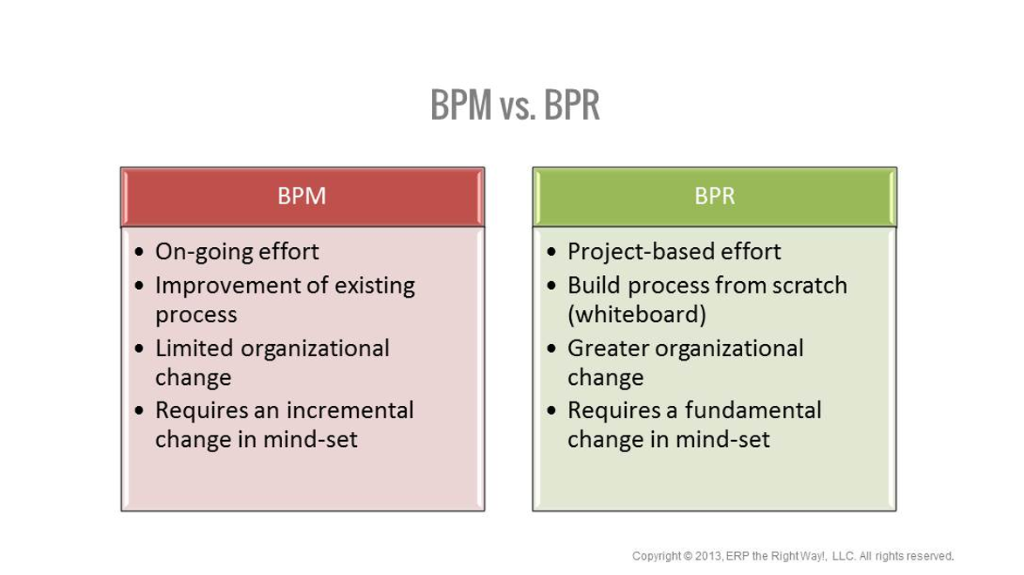
BPM vs BPR - Process Management Approaches
Understanding the difference between improving vs. reinventing business processes
Click to enlarge
BPM (Business Process Management)
- - On-going effort - Continuous improvement
- - Improvement of existing processes
- - Limited organizational change
- - Requires incremental change in mindset
Think: Making small tweaks to make things slightly better
BPR (Business Process Reengineering)
- - Project-based effort - One-time radical change
- - Build from scratch (whiteboard approach)
- - Greater organizational change
- - Requires fundamental change in mindset
Think: Throwing away the old way and starting fresh
Simple Analogy
BPM = Renovating your house (fixing rooms, painting walls)
BPR = Demolishing and building a completely new house
- BPM: Adding faster computers, training staff better, reducing paperwork - BPR: Eliminate paper entirely, create fully digital loan approval system with AI
BCG Matrix - Strategic Actions for Each Quadrant
What to do with products in each category
* STARS
High Growth, High Share
Strategy: BUILD - Invest heavily to maintain leadership
Goal: Invest if needed to create Cash Cow
? QUESTION MARKS
High Growth, Low Share
Strategy: BUILD or DIVEST - Select a few, divest the others
Decision point: Can this become a Star?
$ CASH COWS
Low Growth, High Share
Strategy: HOLD/HARVEST - Milk profits, minimal investment
Use profits to fund Stars and Question Marks
X DOGS
Low Growth, Low Share
Strategy: DIVEST/LIQUIDATE - Sell or discontinue
Don't waste resources on failing products
BCG Matrix and Product Life Cycle
Products typically move through: Question Mark -> Star -> Cash Cow -> Dog as they progress through their life cycle (Introduction -> Growth -> Maturity -> Decline)
- Stars: Apple Services (TV+, iCloud) - High growth, invest heavily - Cash Cows: iPhone - Mature but dominates, generates billions - Question Marks: Vision Pro - New VR headset, uncertain future - Dogs: iPod - Discontinued (was once a Star!)
Ansoff Matrix - Diversification Strategies
The HIGHEST RISK strategy in Ansoff's Matrix has two types
Related Diversification
Value chains possess competitively valuable cross-business strategic fits
Meaning: New product/market is RELATED to existing business
Example: Apple moving from Computers -> Phones -> Tablets (all related tech products)
Unrelated Diversification
Value chains are so dissimilar that no competitively valuable cross-business relationships exist
Meaning: Completely DIFFERENT business with no connection
Example: Virgin Group: Airlines -> Music -> Mobile -> Gyms (all unrelated)
Important Note
Diversification is the HIGHEST RISK strategy because the company enters a completely new market with a new product - they have no existing expertise in either!
JKH practices unrelated diversification - they operate in: - Hotels (Cinnamon) - Supermarkets (Keells) - Financial Services - Property Development - Logistics
සිංහලෙන් තේරුම් ගනිමු
Business terms English වලින්, explanation සිංහලෙන්
ප්රශ්නය 1: Entrepreneur vs Business Individual
Entrepreneur කියන්නේ කවුද?
Entrepreneur කෙනෙක් කියන්නේ අලුත් ideas හදන, risk ගන්න කැමති, customer ගැන හිතන කෙනෙක්. ඔවුන් market එකේ leader වෙන්න try කරනවා. Entrepreneur කෙනෙක් opportunities search කරනවා, problems solve කරන්න innovative solutions හදනවා.
Business Individual කියන්නේ කවුද?
Business Individual කෙනෙක් කියන්නේ traditional way එකට business කරන, profit ගැන විතරක් හිතන, low risk ගන්න කැමති කෙනෙක්. ඔවුන් market එකේ player කෙනෙක් විතරයි. ඔවුන් existing business models follow කරනවා, innovation ගැන වැඩිය හිතන්නේ නෑ.
| Parameter | Entrepreneur | Business Individual |
|---|---|---|
| Nature (ස්වභාවය) | Innovative - අලුත් ideas try කරනවා | Traditional - පරණ ක්රම follow කරනවා |
| Goals (අරමුණු) | Customer Oriented - Customer satisfaction priority | Profit Oriented - Money ගැන විතරක් focus |
| Risk Taking (ආපදා බාරගැනීම) | High Risk - වැඩි risk, වැඩි return | Low Risk - Safe play, අඩු return |
| Level of Innovation | New Ideas Introduce කරනවා | Existing ideas follow කරනවා |
| Market Position | Market Leader - Industry එකේ ඉස්සරහින් | Market Player - අනිත් අය එක්ක compete |
| Business Orientation | Opportunity Oriented - Opportunities හොයනවා | Resource Oriented - තියෙන resources use කරනවා |
Coffee Shop Example:
Entrepreneur කෙනෙක් unique concept එකක් try කරයි (organic coffee, special brewing methods, eco-friendly packaging). Business Individual කෙනෙක් same old way එකට shop එකක් open කරයි.
Sri Lankan Example - Dilmah Tea:
Merrill J. Fernando (Dilmah founder) = Entrepreneur. එයා "tea picked, packed at origin" concept එක introduce කළා - before that, Ceylon tea export කරලා foreign countries වලදී pack කළා. ඔහු industry එක change කළා!
IT Example:
Elon Musk = Entrepreneur (Tesla, SpaceX, PayPal). Traditional car dealer = Business Individual.
Entrepreneurial Process - Restaurant උදාහරණයෙන්
Business එකක් start කරන්න Steps 6ක් follow කරන්න ඕනි. මේක IBM RAH කියලා මතක තියාගන්න!
1. Idea Generation (අදහස් හදන එක):
Restaurant එකක idea එක හිතනවා. "Organic farm-to-table restaurant
එකක් open කරමු" කියලා. Customer needs observe කරනවා, trends study කරනවා.
Restaurant Example: "Sri Lankan fusion
cuisine" - traditional food with modern twist
2. Business Model Development (Business plan හදන එක):
Menu එක, pricing strategy, target customers (dine-in / takeaway /
delivery), location decide කරනවා. Revenue streams identify කරනවා.
Restaurant Example: Premium pricing for
dine-in, affordable takeaway options
3. Resourcing (Resources එකතු කරන එක):
Money හොයනවා (savings, loans, investors), kitchen equipment
ගන්නවා, chefs සහ waiters hire කරනවා, location rent/buy කරනවා.
Restaurant Example: Bank loan LKR 5M,
experienced chef from 5-star hotel hire
4. Promotion (Marketing කරන එක):
Social media marketing (Facebook, Instagram), grand opening
events, influencer collaborations, posters, flyers distribute කරනවා.
Restaurant Example: Food bloggers invite,
opening day 20% discount
5. Actualisation (ඇත්ත business start කරන එක):
Restaurant එක officially open කරනවා, customers serve කරන්න පටන්
ගන්නවා. Operations manage කරනවා - orders, inventory, staff scheduling.
Restaurant Example: Grand opening event with
free samples
6. Harvesting (ප්රතිලාභ ලබාගන්න එක):
Profit එක ගන්නවා, expand කරන්න plan කරනවා - new branches,
franchising, sell the business, or continue growth.
Restaurant Example: After 2 years success,
second branch open in another city
Memory Trick: IBM RAH
Idea → Business Model → Resourcing → (Promotion) → Actualisation → Harvesting
Types of Competitors - තරඟකාරීන් වර්ග 3ක්
Business එකක competitors types 3ක් තියෙනවා. DIF කියලා මතක තියාගන්න: Direct, Indirect, Future!
1. Direct Competitors (සෘජු තරඟකාරීන්):
ඔයාගේ same product එකම, same
customers ලට විකුණන අය.
Pizza Shop Example: ඒ road එකේම තියෙන අනිත් pizza shop
එක.
Sri Lankan Example: Dialog vs Mobitel vs Hutch (mobile
services)
IT Example: Norton vs McAfee (antivirus software)
2. Indirect Competitors (වක්ර තරඟකාරීන්):
Different product එකක් විකුණන්නෙ, නමුත්
same need එක satisfy කරනවා. Substitute products!
Pizza Shop Example: KFC, McDonald's, food delivery apps (PickMe
Food), grocery store ready meals, home cooking.
Sri Lankan Example: Trains vs Buses vs PickMe (transportation
need)
IT Example: Google Drive vs USB flash drives (storage need)
3. Future Competitors (අනාගත තරඟකාරීන්):
දැන් market එකේ නැහැ, නමුත් future එකේදි enter
වෙන්න පුළුවන් අය. Plan කරනවා, resources gather කරනවා.
Pizza Shop Example: Food truck එකක් permanent shop එකක් open කරන්න
plan කරනවා.
Sri Lankan Example: Amazon entering Sri Lanka (future threat to
local e-commerce)
IT Example: Startups developing AI coding tools (threat to GitHub
Copilot)
• Competitors ගැන දැනගත්තම better strategy හදන්න පුළුවන්
• Pricing decide කරන්න help වෙනවා
• Differentiation - competitors වලින් different වෙන්න ideas ලැබෙනවා
• Threats predict කරන්න පුළුවන්
ප්රශ්නය 2: Mergers & Acquisitions (M&A)
Companies එකතු වෙන/buy කරන ප්රධාන ක්රම දෙකක්!
Merger (ඒකාබද්ධ වීම)
Company A + B = C
Companies දෙකක් එකතු වෙලා අලුත් company එකක් වෙනවා.
Example: Disney + Pixar = Disney Pixar
Acquisition (අත්පත් කර ගැනීම)
Company A buys B
Company එකක් තවත් company එකක් buy කරනවා. Buyer survives.
Example: Facebook bought Instagram
M&A කරන්නේ ඇයි? (Reasons)
- Market Power වැඩි කරන්න: Competitors buy කරලා competition අඩු කරනවා
- Risk Spread කරන්න: Different industries වලට diversify වෙනවා
- Core Business Shift කරන්න: More profitable markets වලට move වෙනවා
- Change Manage කරන්න: Technology shifts, regulations වලට adapt වෙන්න
M&A Benefits (වාසි)
| Benefit | Example |
|---|---|
| Market Dominance - Market share වැඩි | Tata acquired Jaguar Land Rover |
| Risk Reduction - Diversification | Microsoft acquired LinkedIn |
| New Market Access - Quick entry | Facebook acquired WhatsApp, Instagram |
| Technology/Skills Acquire | Google acquired DeepMind (AI) |
Commercial Bank acquiring Hatton National Bank branches - Market share වැඩි කරගත්තා
Dialog acquiring Lanka Bell - Fixed line market entry
1. Integration Problems: Company cultures, systems merge කරන්න බැරි වෙනවා
2. Poor Target Evaluation: Due diligence හරියට කළේ නෑ, overpay කරනවා
3. High Debt: Loan ගහලා buy කරනවා, repay කරන්න බැරි වෙනවා
4. Synergy Failure: Expected cost savings realise වෙන්නේ නැහැ
5. Excessive Diversification: Core business focus නැති වෙනවා
6. Manager Distraction: Managers M&A ගැන focus, operations neglect
7. Too Large: Company එක manage කරන්න බැරි තරම් ලොකු වෙනවා
ප්රශ්නය 3: Feasibility Study (ශක්යතා අධ්යයනය)
Business එකක් start කරන්න කලින් check කරන්න ඕනි දේවල් 4ක්! POIF කියලා මතක තියාගන්න.
Product
Buy කරයිද?
Organizational
Team capable ද?
Industry/Market
Market good ද?
Financial
Money viable ද?
1. Product Feasibility (නිෂ්පාදන ශක්යතාව): People
product එක buy කරයිද?
• Desirability: Product එක sense කරනවද? Customers ට ඕනිද?
• Demand: ඇත්තටම buy කරන්න willing ද? Market research!
Fail Example: Cheetos Lip Balm - කවුද Cheetos
flavour lip balm ගාන්නේ!
IT Example: Beta version release කරලා user feedback ගන්නවා before
full launch
2. Organizational Feasibility (සංවිධානාත්මක ශක්යතාව):
Team එක capable ද?
• Management Prowess: Founders ට passion තියෙනවද? Industry knowledge?
• Resource Sufficiency: Office, equipment, staff access තියෙනවද?
Example: Medical lab start කරන්න trained staff, proper equipment
ඕනි
IT Example: Software company start කරන්න skilled developers,
infrastructure ඕනි
3. Industry/Market Feasibility (කර්මාන්ත/වෙළඳපොළ
ශක්යතාව): Market එක good ද?
• Industry Attractiveness: Young, fragmented, growing industries best!
• Target Market: Profit කරන්න enough ලොකු, competition නැති enough
Example: Sri Lanka e-commerce market - growing but not saturated
yet
IT Example: AI/ML industry = growing. DVD rental = declining
(avoid!)
4. Financial Feasibility (මූල්ය ශක්යතාව):
Money wise viable ද?
• Start-up Cost: Equipment, rent, salaries, marketing - මුළු cost කීයද?
• Profit Realistic ද?: Expected revenue vs costs calculate, break-even
point
• Funding Available?: Personal savings, loans, investors?
Example: Restaurant - rent LKR 200K/month, equipment LKR 2M,
break-even 18 months
Memory Trick: POIF
Product → Organizational → Industry/Market → Financial
හැම feasibility එකටම "YES" ආවොත් විතරයි business start කරන්න ඕනි!
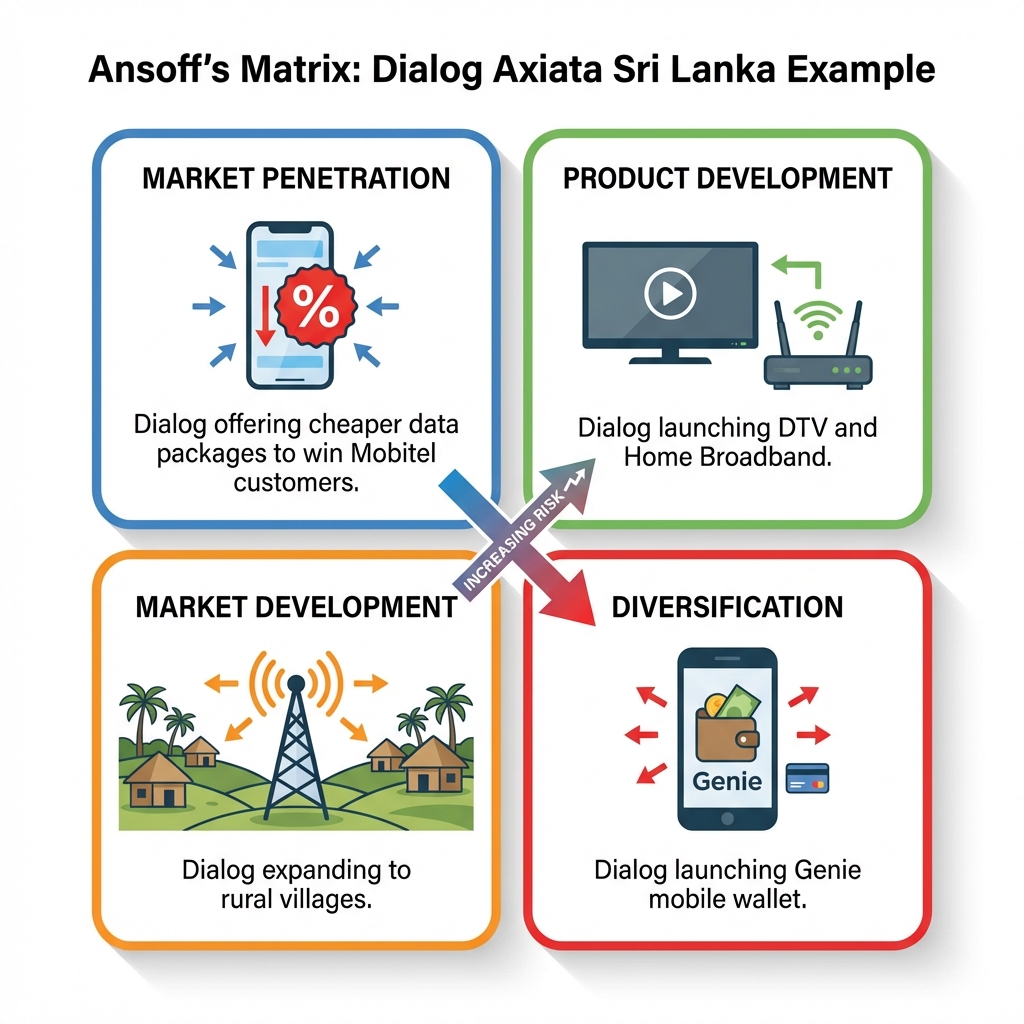
ප්රශ්නය 4a: Ansoff's Matrix (වර්ධන උපාය මාර්ග)
Business grow කරන්න strategies 4 ක්! PPMD කියලා මතක තියාගන්න: Penetration, Product, Market, Diversification
LOW RISK
MEDIUM RISK
MEDIUM RISK
HIGH RISK
1. Market Penetration: Same product, Same
market - LOW
RISK
දැනට තියෙන market එකේම sales වැඩි කරන එක. Ads, discounts,
promotions use කරනවා.
Example: Coca-Cola ads වැඩි කරනවා, buy 1 get 1 offers
Dialog Example: Existing customers ට affordable data packages,
promotional discounts
2. Product Development: New product, Same
market - MEDIUM
RISK
දැනට තියෙන customers ට new product එකක් දෙනවා. R&D,
innovation!
Example: Apple new iPhone launch කරනවා existing users ට
Dialog Example: Dialog TV, Dialog Home Broadband - existing mobile
customers ට new services
3. Market Development: Same product, New
market - MEDIUM
RISK
දැනට තියෙන product එක new market එකකට ගෙනියනවා. Geographic
expansion, new segments!
Example: McDonald's new country එකකට යනවා
Dialog Example: Rural areas වලට mobile coverage expand
කරනවා
4. Diversification: New product, New
market - HIGH
RISK!
Completely new දෙකම. Highest risk but highest potential
return!
Example: Tesla cars වලින් solar panels වලට ගියා
Dialog Example: "Genie" mobile wallet - complete new product, new
market segment
Memory Trick: PPMD + Risk Diagonal
Penetration → Product Dev → Market Dev → Diversification
Risk increases as you move from top-left (Penetration) to bottom-right (Diversification)!
ප්රශ්නය 4b: Business Ownership Forms (ව්යාපාර හිමිකාරිත්ව ආකෘති)
Sole Proprietorship
Owners: 1
Unlimited Liability
+ Easy to start, full control
- Personal assets at risk
Partnership
Owners: 2+
Unlimited Liability
+ More capital, shared skills
- Partner disputes, still risky
Company (LLC)
Owners: Unlimited
Limited Liability!
+ Assets safe, investors easy
- Complex setup, regulations
1. Personal assets protected - Business fail වුණත් ගෙයි දොරටු යන්නේ නෑ
2. Unlimited investors ගන්න පුළුවන් - Shares issue කරන්න පුළුවන්
3. Investors ට credible - VC/Angel investors LLC expect කරනවා
4. Growth support - IPO කරන්න පුළුවන්, sell කරන්න easy
Sole: Local grocery shops, freelancers, tutors
Partnership: Law firms, accounting practices, small restaurants
Company: Dialog Axiata PLC, John Keells Holdings, Virtusa (IT)
Angel Investors (දේව දූත ආයෝජකයින්)
Startups ට early stage එකේදී funding දෙන wealthy individuals. Banks refuse කරන්නේ ඇති risk ගන්න prepared අය!
Angel Investor ගෙ Characteristics:
- Personal Wealth: ඔවුන්ගේ මුදල් invest කරනවා (bank money නෙවෙයි)
- High Risk Tolerance: Risk ගන්න කැමති - startups risky නිසා
- Supportive Motivation: Profit විතරක් නෙමෙයි, entrepreneurs ට help කරන්නත් කැමති
- Personal Relationship: Friends, family, or independent wealthy people
- Early-Stage Focus: Seed/Startup stage එකේ invest කරනවා
- Accredited Investors: Legal requirements meet කරලා high-risk investments කරන්න qualified
Startups ට Benefits:
Banks refuse කරන විට funding
Experience, knowledge share
Returns wait කරන්න prepared
Future investors ගන්න easy
Angel: Personal money, early stage, smaller amounts (LKR 1-10M), mentorship focus
VC: Fund money, growth stage, larger amounts (LKR 50M+), return focus
BOV Capital - Sri Lankan angel investment network
Example: Kapruka.com, PickMe early stage funding from local angel investors
ප්රශ්නය 5: Strategic Concepts
a) BPR (Business Process Reengineering):
Processes completely change කරන එක - cost, speed,
quality improve වෙන්න. Banks manual loan approval වෙනුවට digital system use කරනවා.
b) Porter's Value Chain:
Company එකේ activities බලලා value add වෙන ඒවා
identify කරන එක. Primary (production, sales) + Support (HR, IT) activities.
c) Branding:
Company එකට unique identity එකක් create කරන එක.
Apple brand strong නිසා premium prices charge කරන්න පුළුවන්.
d) BCG Matrix: Products 4 types වලට divide කරනවා:
• Stars: High growth, high share - invest කරන්න
• Cash Cows: Low growth, high share - profit ගන්න
• Question Marks: High growth, low share - decide කරන්න
• Dogs: Low growth, low share - sell/kill කරන්න
e) International Business Risks:
• Foreign Exchange Risk: Currency value change වෙනවා
• Political Risk: Government unstable
• Cultural Risk: Different customs
• Legal Risk: Different laws
මතක තියාගන්න Tips
Entrepreneur = ICHOML: Innovative, Customer oriented, High risk, Opportunity focused, Market Leader
Ansoff = PPMD: Penetration, Product dev, Market dev, Diversification
BCG = SCQD: Stars, Cash Cows, Question marks, Dogs
Competitors = DIF: Direct, Indirect, Future
Porter's Generic Strategies - Competitive Advantage
Company එකකට competition එකේ ඉදිරියෙනුත් ඉන්න strategies 4ක්:
1. Cost Leadership: Lowest price
in the market
Industry එකේම අඩුම price එකට products දෙනවා.
Example: Walmart, AirAsia, ලංකාවේ Cargills Food City
2. Differentiation: Unique
products that customers pay more for
Products/Services unique නිසා customers
premium price ගෙවනවා.
Example: BMW, Apple, ලංකාවේ Munchee
3. Cost Focus: Low price in a
NICHE market
Specific group එකකට low price products.
Example: Village Fair (rural areas), Budget airlines (price-sensitive travelers)
4. Differentiation Focus: Premium products for NICHE market
Specific group එකකට premium products.
Example: Sensodyne (sensitive teeth ඇති අය), ලංකාවේ Spa Ceylon
Clear strategy නැතුව low-cost ද differentiation ද try කළොත් - both fail වෙනවා! Company එකකට ONE clear strategy ඕනි.
BPM vs BPR - Process Management වෙනස
Business processes manage කරන දෙයාකාර ක්රම:
BPM (Business Process Management)
- On-going effort - දිගටම improve කරන එක
- Existing process improve කරනවා
- Limited change - ටිකක් විතරක් change වෙනවා
- Mindset පොඩ්ඩක් විතරක් change වෙන්න ඕනි
Simple: ගෙයක් renovate කරන එක - walls paint කරනවා, tiles change කරනවා
BPR (Business Process Reengineering)
- Project-based effort - එක පාරක් radical change
- Scratch එකෙන් process හදනවා
- Greater change - organization එකම change වෙනවා
- Mindset completely change වෙන්න ඕනි
Simple: ගෙය demolish කරලා අලුතින් build කරන එක
BPM: Computers faster කරනවා, staff train කරනවා, paperwork අඩු කරනවා
BPR: Paper completely eliminate - AI driven digital loan approval system හදනවා
BCG Matrix - Products Manage කරන Strategies 4ක්
BCG Matrix quadrant එකක් එක්කම strategy එකක් තියෙනවා:
STARS (* High Growth, High Share):
Strategy: BUILD -
Heavy investment කරන්න leader position maintain කරන්න. Goal එක Cash Cow එකක් හදන එක.
QUESTION MARKS (? High Growth, Low Share):
Strategy: BUILD or
DIVEST -
Select a few to invest, අනිත් ඒවා divest කරන්න. "This can become a Star?" decide
කරන්න.
CASH COWS ($ Low Growth, High Share):
Strategy: HOLD/HARVEST -
Profits milk කරන්න, minimal investment. Cash එක Stars/Question Marks fund කරන්න use
කරන්න.
DOGS (X Low Growth, Low Share):
Strategy: DIVEST/LIQUIDATE -
Sell/discontinue කරන්න. Failing products වලට resources waste කරන්න එපා.
Products normally move: Question Mark -> Star -> Cash Cow -> Dog
(Introduction -> Growth -> Maturity -> Decline)
Example: iPod Star එකෙන් Dog වෙලා discontinue වුණා!
Ansoff Diversification - Types 2ක්
Diversification Ansoff Matrix එකේ HIGHEST RISK strategy එක. ඒකට types 2 ක් තියෙනවා:
Related Diversification
New business එක existing business එකට related
Value chains competitively valuable cross-business strategic fits තියෙනවා
Example: Apple -
Computers -> Phones -> Tablets
(All tech products, related!)
Unrelated Diversification
New business එක completely different - connection නෑ
Value chains so dissimilar that no cross-business relationships exist
Example: Virgin Group -
Airlines -> Music -> Mobile -> Gyms
(All completely unrelated!)
JKH Unrelated Diversification practice කරනවා:
- Hotels (Cinnamon)
- Supermarkets (Keells)
- Financial Services
- Property Development
- Logistics
All completely different businesses!